
Travelling with allergies can feel like planning for every possible “what if” before you even leave the house.
Whether your child has a severe food allergy, a medication allergy, environmental allergies or eczema and asthma triggers that flare while travelling, holidays often require much more preparation than simply packing clothes and booking flights.
Airports, hotels, cruise ships, restaurants and even theme parks can all bring new risks – unfamiliar foods, language barriers, hidden ingredients, shared kitchens, insect bites, cleaning products, pollen exposure and limited access to emergency medication.
For families travelling with allergic children, the goal is not perfect control. It is reducing risk, planning ahead and knowing what to do if something goes wrong.
If you’d like to see what we are getting up to as it’s happening, please give my Instagram a follow @autismfamilytravelguide
This page is your Allergy Travel Hub for Autism Family Travel Guide. From here, you will find guides covering flying with allergies, travelling with EpiPens, food allergy planning, cruise travel, medication rules and practical ways to make holidays safer and less stressful.
Why Travelling With Allergies Needs Extra Planning
Allergies do not take a holiday.
Something as simple as a plane meal, hotel breakfast buffet or unfamiliar snack from a shop can quickly become a serious problem if allergens are not clearly labelled or understood.
For many families, travel planning includes:
- Checking airline allergy policies
- Researching local food labelling laws
- Bringing enough medication for the full trip
- Carrying extra antihistamines and emergency medication
- Packing safe snacks for flights and delays
- Finding nearby pharmacies and hospitals
- Learning key allergy phrases in the local language
- Checking whether medical care is covered by insurance
Planning for allergies often overlaps with autism travel too – especially when children also have restricted diets, sensory food aversions or strong food routines.
Preparation creates confidence.
What You’ll Find in My Allergy Travel Guides
The allergy travel articles linked below focus on practical, real-life advice for travelling with children who have allergies.
Topics include:
- Flying with food allergies
- Allergy accommodations airlines can make for those travelling with food allergies
- Flying with EpiPens and allergy medication
- Cruising with allergies
- Airport assistance (find it in my guide to getting help at the airport) along with disabled facilities and accessibility contacts at airports (check out my guide with links to special assistance information, disabled facilities available and contact links for different airports around the world)
- Managing restricted diets abroad
- Food shopping and safe snacks while travelling
- Medication rules for different countries
- Real experiences from our own family travel
The goal is simple: helping you travel safely without turning every trip into a source of anxiety.
Flying With Allergies Guides
- Flying with a food allergy
- Flying with EpiPens
- Flying with antihistamines and allergy medication
- Airport special assistance for children with allergies
- Using pre-boarding for allergy preparation
- How airline allergy announcements work
More allergy travel guides are added regularly as we continue travelling. Sometimes, you will see a note that says “coming soon” beside an article name or title and this indicates that it is a planned post and should be live on the website before you know it.
Airline Meal Code Guides
- Airline meal codes and what they mean
- What does VGML mean?
- What does CHML mean?
- What does ALML mean?
- What does CLML mean?
- What foes LFML mean?
Some of the airline meal codes can be confusing and some seem to overlap with one another, which is why I have started to write out guides for the airline meal codes that are used the most.
Cruise Guides for Allergies
- Cruising with food allergies
- Cruising with EpiPens
- Cruise buffet safety with food allergies
- Dining room allergy protocols on cruise ships
- Family cruising with restricted diets
Some cruise lines handle allergies extremely well, while others require much more self-advocacy. These guides help you know what to expect before you board.
Destination Allergy Guides
- Bringing medication abroad (a list of all the articles I’ve written about bringing medication into a certain country)
- Buying antihistamines abroad
- Can you trust over-the-counter medication overseas?
- What OTC medication is available in Taiwan?
- What OTC medication is available in Thailand?
Some countries have strict rules for prescription medication, ADHD medication and controlled drugs, so checking before travel is essential.
Practical Tips for Travelling With Allergies
- Always carry medication in hand luggage. Never place EpiPens or essential medication in checked baggage. Learn more in my flying with EpiPens guide.
- Bring more medication than you think you need, but not an unreasonable amount more. Delays happen, bags go missing and pharmacies may not stock the same brands.
- Carry a doctor’s letter where helpful. This is especially important for injectable medication, controlled medication and larger quantities of prescription medication. My guide breaks down what to include on your doctors travel letter.
- Pack safe food for travel days. Airports, delays and late arrivals are often the hardest times to find suitable food.
- Learn key allergy phrases. Being able to clearly explain your allergy in the local language can be lifesaving. My guide includes a free Lonely Planet eBook of accessible travel phrases including allergies.
- Check your accommodation carefully. Apartments with kitchens often work better than hotels for managing severe food allergies.
- Know your emergency plan. Save local emergency numbers and locate the nearest pharmacy and hospital before you need them. My guide includes emeregency and important numbers for the UK.
Is Travelling With Allergies Family-Friendly?
Yes…but it depends heavily on preparation.
Some destinations make allergy travel much easier because of clear food labelling laws, strong healthcare systems and better allergy awareness. Others require much more planning and caution.
Cruises can work brilliantly because staff can often note allergies in advance and dining becomes more predictable. Apartments can work better than all-inclusive hotels because you control the food environment. Direct flights can reduce exposure points and travel stress.
The aim of this hub is to help you travel confidently, not fearfully.
You do not need to stop travelling because of allergies. You just need a better system.
Allergies Abroad Without Panic
Travelling safely with allergies is not about eliminating every risk. It is about knowing which risks matter most and preparing for them calmly.
That means asking awkward questions, carrying too many snacks, double-checking ingredients and being the person who always has backup medication.
That is not overreacting. That is responsible travel.
Travelling With Allergies Resources
Below are some links to resources I have either created myself or found during research and travelling with my own family. I hope they help you plan safer, calmer trips with allergies.
- Free food allergy translation cards
- Equal Eats allergy translation cards
- Doctor’s letter guide for travelling with medication
- Airline meal codes and what they mean
- Airport assistance guide
- Sunflower Lanyard guide
- DPNA airport code guide
- Flying with EpiPens
Travelling With Allergies FAQ
Can you fly with severe food allergies?
Yes – many families fly safely with severe food allergies every year. Preparation matters most. Carry all medication in hand luggage, bring safe food, notify the airline where appropriate and board prepared to clean your seating area if needed. Some airlines will make allergy announcements or offer pre-boarding support, but policies vary widely.
Can you bring EpiPens on a plane?
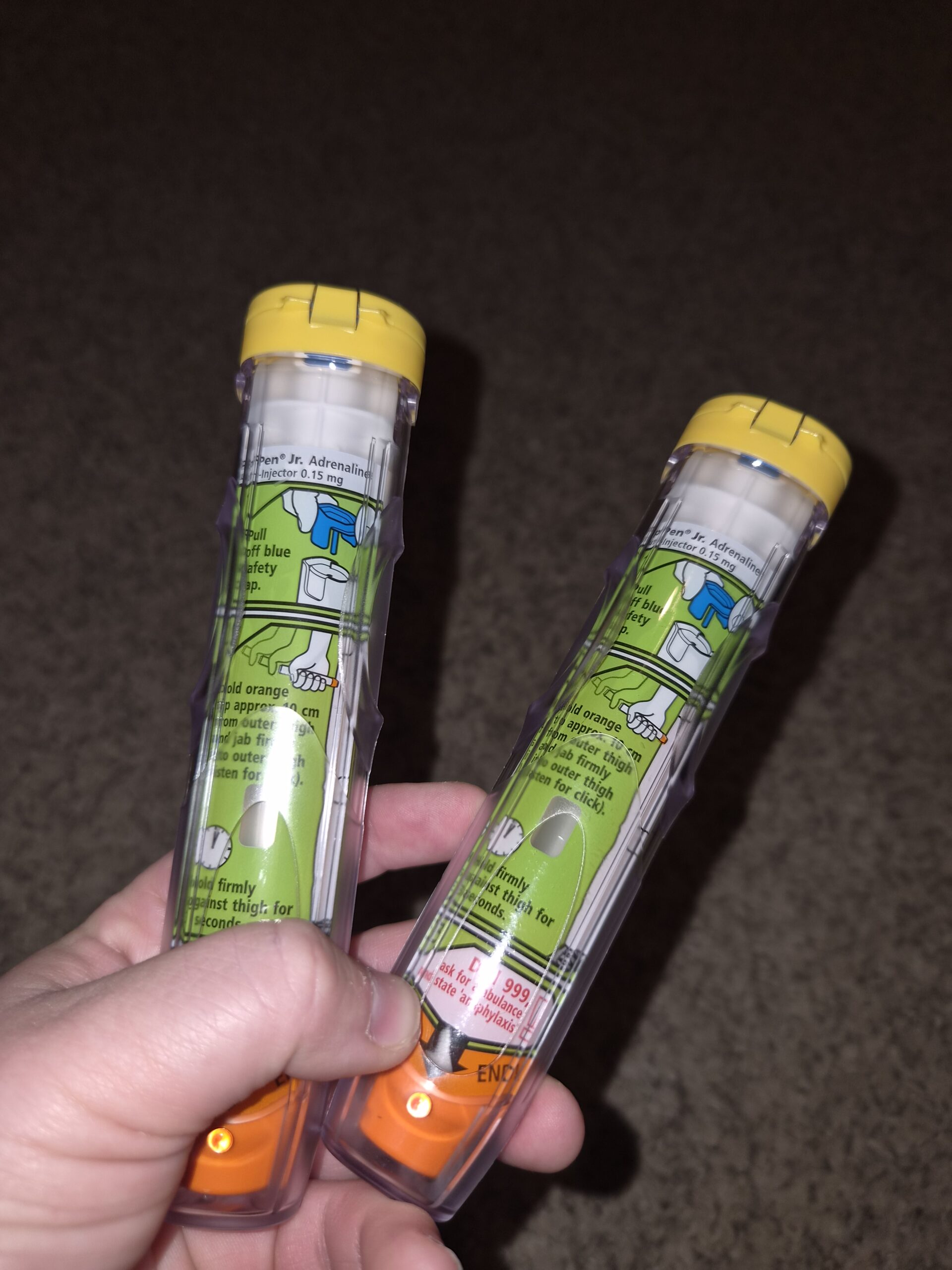
Yes – EpiPens should always travel in hand luggage, not checked baggage. Airport security is used to seeing them, and a doctor’s letter can be helpful, especially when travelling internationally or carrying multiple pens. Keep them easily accessible, not packed away in overhead luggage.
Do airlines ban allergens like peanuts?
Sometimes, but not always. Very few airlines offer a full allergen ban because they cannot control what other passengers bring onboard. Some may stop serving a specific allergen, create a buffer zone or make a cabin announcement asking nearby passengers not to consume certain foods. Policies differ by airline, so always check directly.
Is cruising good for food allergies?
Cruising can work very well for food allergies because dining is more controlled than constantly changing restaurants. Cruise lines often allow allergies to be discussed before sailing, and main dining rooms are usually safer than buffets. Speaking to staff early and clearly is still essential.
How do you travel internationally with allergy medication?
Keep all medication in original packaging, bring prescriptions where relevant and carry a doctor’s letter for prescription or injectable medication. Check destination rules before flying, especially for controlled medication or medicines that may be restricted in some countries. Never assume another country follows the same pharmacy rules as home.
Should I book a hotel or apartment with food allergies?
For severe food allergies, apartments often work better because you control ingredients, cooking and cross-contamination risks. Hotels can still work well, especially if they are experienced with allergy management, but self-catering gives families more flexibility and often much less stress.
Continue Planning Your Trip With an Allergy
- Start at the beginning – learn about travelling with an allergy from my main guide
- Learn about airline meal codes and what they stand for so you can be sure your meal is allergen free
- Find out what is in my babies allergy travel bag so you can save yourself the headache of packing without a list
- Explore what it means to fly with medical luggage as an allergy travellers
- Download and print some free allergy translation cards before your trip
- Find out what Equal Eats allergy translation cards are and how to use them to travel safer
- Learn why it is important to learn important phrases related to your allergy before you travel and downloaed the free accessible travel translations eBook
- Figure out what to include on a doctors travel letter for medication so you can get it right the first time
- Find out more about flying with EpiPens so you can travel with confidence
Continue Planning Your Next Trip With A Disability
Head to any of my more specific guides for disabled travellers by clicking one of the images below.


