
Hong Kong is one of the most structured and manageable city destinations we have visited as a family with autistic children. It combines world-class public transport, clear signage, reliable routines and compact neighbourhoods with dramatic scenery, theme parks, autism-friendly attractions and calm green spaces.
Despite its reputation for being busy, travelling to Hong Kong with autistic children can actually feel easier than many European capitals because the systems are so predictable. The MTR is simple to use, airports are well organised and attractions like Hong Kong Disneyland and Ocean Park are built around clear structure and timed entry. Our guide to accessible transport in Hong Kong explains more about the transport and what to expect in Hong Kong.
Whether you are planning a family holiday to Hong Kong, combining it with a cruise or using it as a softer introduction to Asia before mainland China, the city works incredibly well for many neurodivergent families.
If you’d like to see what we are getting up to as it’s happening, please give our Instagram a follow @autismfamilytravelguide
This page is your step-by-step Hong Kong planning guide. Instead of simply listing blog posts, it walks you through how to plan a trip to Hong Kong with autistic children – from entry requirements and airport special assistance to choosing the best area to stay, navigating transport and selecting sensory-friendly activities.
Quick wins for visiting Hong Kong with autistic children:
- Book airport special assistance at Hong Kong International Airport before you fly (our guide to special assistance at HKIA explains how to do this and what to expect)
- Use an Octopus Card for simple, predictable public transport and small purchases (I also have a guide to help you understand the Hong Kong Octopus Card)
- Choose Lantau Island if your child needs quieter evenings and more space (learn more about Lantau Island from our guide)
- Stay near an MTR station to reduce daily travel stress (our guide will teach you all about accessible transport in Hong Kong)
- Avoid peak summer heat and typhoon season where possible
- Use the Sunflower Lanyard or Talos Foundation Autism Lanyard for hidden disabilities support (if you don’t know who the Talos Foundation are, our guide will explain that)
- Download offline maps and transport routes before arrival
- Carry medication in original packaging and check controlled medication rules early
- Use visual planning with hotel photos, airport walkthroughs and MTR maps before travel
- Visit major attractions early in the day to avoid crowds and sensory overload
Step 1: Planning Your Hong Kong Trip With Kids – Practical Information
Hong Kong is extremely visitor-friendly, but a few practical checks before booking can remove unnecessary stress later.
Entry Requirements for Hong Kong and Passport Validity
Always check current entry rules and passport validity rules before booking. Hong Kong operates its own immigration system. Many visitors receive visa-free entry for short stays, but confirm this before committing to flights. Check how long you need left on your passport to visit Hong Kong, our guide to passport validity rules explains more about this.
Visitors coming to Hong Kong will receive a landing card, which they must keep hold of until they leave Hong Kong. Our guide breaks down what the landing card is, and how to keep it safe.
Healthcare in Hong Kong and Travel Insurance
Hong Kong has an excellent healthcare system, but treatment for visitors is not free. Make sure your travel insurance covers pre-existing conditions and any additional support needs.
A useful part of any family travel checklist is creating a Google Drive folder for important travel documents such as a copy of your travel insurance information.
Vaccinations Required for Hong Kong
Typically, anywhere you travel outside of the UK will require you to have the standard vaccines recommended for life in the UK. The most reliable source for up-to-date travel vaccination guidance is the NHS Inform travel vaccine information website and the TravelPro travel vaccine information site.
Weather in Hong Kong and Seasonal Planning
Hong Kong has hot, humid summers and mild winters. Typhoon season typically runs from around May to October. Summer heat can be intense and may affect regulation, so factor in indoor breaks and air-conditioned spaces.
Winter is usually comfortable for walking and outdoor exploring. We visited most recently in December and January and could walk around in our normal clothes we would wear in Scotland from spring to autumn.
Currency Used in Hong Kong
The currency is the Hong Kong Dollar (HKD). Octopus cards are widely used for public transport and can also be used in many shops and convenience stores. Contactless card payments are common in malls and attractions, though small local businesses may prefer cash.
I have had issues with my cards getting blocked when we travel around by cruise ship or turn off our sim cards and miss texts from the card companies – but one card that has been completely reliable is my Wise card. Not only do you get a digital card which is handy for emergencies, there is a reliable app where you can have a mix of currencies and track your spending.
If you want a travel card that reduces the risk of frozen transactions while travelling between countries, you can explore Wise using our referral link: Wise referral.
Language Spoken in Hong Kong
There are two official languages spoken in Hong Kong: English and Cantonese. In everyday life, people often use Cantonese Chinses, but English is used in business, law and government. Prepare key phrases in advance if your child finds language barriers stressful. Our guide to learning key phrases before you travel includes a link to a free eBook with accessible travel translations in 35 languages.
Mobile Data and Connectivity in Hong Kong With Autistic Children
Mobile data connectivity is excellent across the Hong Kong, including on public transport. If your child relies on devices for regulation, download offline maps and videos in advance for flights or longer transport stretches or arrange to have an eSIM that activates as soon as you land in Hong Kong.
You can use local SIM cards or eSIMs, but it is usually much less fuss to install an eSIM (providing your phone has the technology to accept one). I tend to use Trip.com for affordable local eSIMs and Airalo when travelling across multiple countries. If you want to try Airalo, you can use our referral code NATASH7173 for £2.50 off your first eSIM.
Medication Rules for Travelling to Hong Kong
If travelling internationally, check UK (or wherever you originate from) and Hong Kong guidance on bringing prescription medication. Keep medicines in original packaging with pharmacy labels attached, particularly when flying. It is advised to bring a doctors letter for your medication, and you can find out exactly what Hong Kong officials expect to see on your doctors travel letter for medication in our guide.
If you are travelling with ADHD medication, controlled medication or larger quantities of prescription medicine, our full guide to bringing controlled medication to Hong Kong explains exactly what paperwork you need, how to prepare and what to expect at customs. You can also get more general advice in our guide to travelling internationally with ADHD medication.
Time Difference in Hong Kong.
Hong Kong uses UTC time + 8 hours. This is the time in Hong Kong right now.
Step 2: Travelling to Hong Kong and Managing Airports
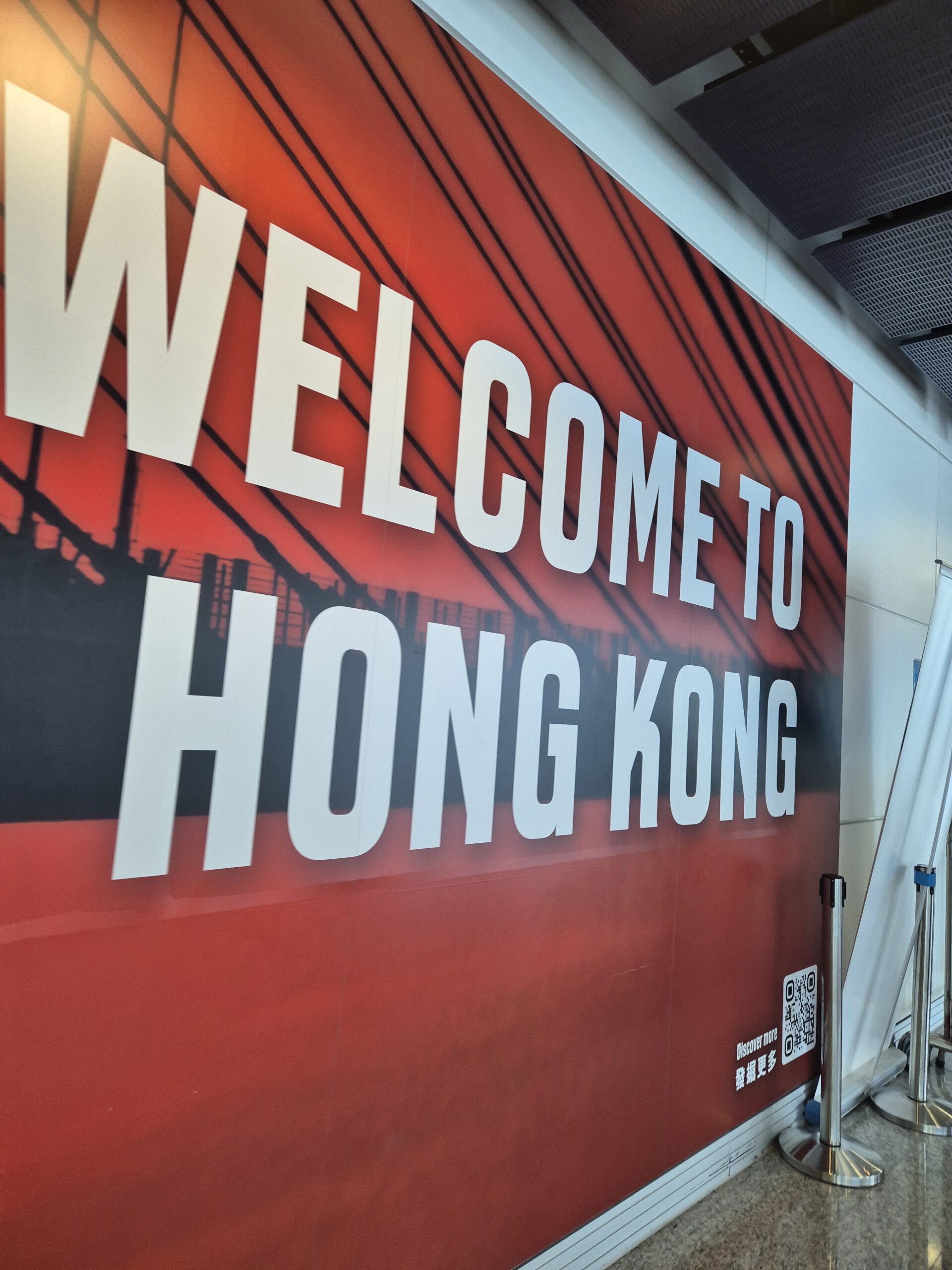
Most visitors arrive via Hong Kong International Airport, one of the most efficient airports in Asia. The Airport Express train provides a fast, structured transfer into the city, with clear signage and predictable journey times.
When planning a visit to Hong Kong with autistic children you should first consider:
- Booking airport special assistance in advance
- Understanding airline disability codes
- Using the Sunflower Lanyard for hidden disabilities
- Researching the Talos Foundation Autism Lanyard programme in Hong Kong
Hong Kong Airport Guides:
- Special assistance at Hong Kong International Airport
- Disabled facilities at Hong Kong International Airport
More helpful guides for managing the airport in Hong Kong with autistic children:
- How to get help at the airport as a disabled person
- Airport assistance for those with hidden disabilities
- What is the DPNA code?
- What does PRM mean?
- Airport and airline disability codes
- The Sunflower Lanyard
- What is medical luggage?
- Medical luggage policies for the world’s top 25 airlines
Hong Kong airport is modern, clearly signposted and generally calm compared to many global hubs. For many autistic travellers, the predictability helps.
Step 3: Where to Stay in Hong Kong With Kids
Choosing where to stay in Hong Kong with kids makes a huge difference to how manageable your trip feels. The best base depends on your child’s sensory needs, how much public transport you want to use and whether your trip is focused on sightseeing, Disneyland or quieter evenings. For an overall view of Hong Kong, start with our Hong Kong with autistic children guide.
Tsim Sha Tsui
On the Kowloon side, this area offers:
- Walkable waterfront promenade
- Easy MTR access
- Harbour views
- Shopping centres with indoor space
Choose this area if you want structure, transport simplicity and evening harbour walks. Learn more about what to expect in this area with our Tsim Sha Tsui with autistic children guide.
Hong Kong Island
Central and Admiralty offers:
- Efficient transport connections
- Structured business-district layout
- Easy access to Victoria Peak
- Ferry connections
Choose this side if you prefer a slightly more organised city feel. For what to expect, check out our Hong Kong Island with autistic children guide.
Lantau Island
Home to Hong Kong Disneyland and Ngong Ping, Lantau offers:
- More open space
- Resort-style accommodation
- Proximity to theme parks
- Quieter evenings
Choose Lantau if your trip centres around Disneyland or if your child regulates better with space and fewer crowds. Our guide to Lantau Island with autistic children will break down how to best manage your trip to Lantau Island with kids.
How to Choose The Best Area to Stay in Hong Kong With Autistic Children
- Choose Tsim Sha Tsui for walkability, harbour views and simple transport links.
- Choose Hong Kong Island for a more structured city feel and easy access to major attractions.
- Choose Lantau Island for more open space, resort-style hotels and a calmer pace around Disneyland.
I usually recommend staying close to an MTR station rather than focusing only on hotel stars. Predictable transport options like the MTR can create calmer days.
Step 4: Getting Around Hong Kong With Kids
Hong Kong’s transport system is one of its biggest strengths for families visiting Hong Kong with autistic children.
- MTR metro system with clear colour-coded lines
- Frequent buses with digital displays
- Star Ferry across Victoria Harbour
- Airport Express rail link
- Well-marked pedestrian routes
Transport is predictable, frequent and well signposted. If accessibility matters, you can set up Google Maps to prioritise lift access instead of escalators.
Helpful guides for navigating Hong Kong with autistic children:
- How to set up Google Maps accessibility feature
- How to use Google Maps without a internet connection
- Hong Kong Octopus Card guide
- Accessible transport in Hong Kong
- An accessible guide to taxis in Hong Kong
Step 5: Things to do in Hong Kong With Kids
Hong Kong offers a mix of structured indoor attractions, theme parks and scenic outdoor experiences.
Here are some attractions we consider sensory-friendly or known to have autism initiatives:
- Hong Kong Disneyland
- Ocean Park + Fast Track
- Hong Kong Science Museum
- Ngong Ping 360 Cable Car
- Peak Tram & Victoria Peak
- LEGOLAND Discovery Centre Hong Kong
- Trick Eye Museum
- World Of Mirrors
Where available, if you book through GetYourGuide and use our code AUTISMFAMILYTRAVELGUIDE5 you can get a discount.
- When choosing activities, consider:
- Noise levels
- Queue systems
- Indoor cooling
- Escape spaces
- Peak times
Hong Kong can be busy, but many attractions are well organised with timed entries and clear pathways.
Step 6: Visual Planning and Familiarisation
Before travelling to Hong Kong with autistic children, watch real-time walk-throughs on Instagram or YouTube. Seeing hotel rooms, transport systems and queue layouts in advance can dramatically reduce anxiety.
Preview:
- Airport arrival routes
- MTR ticket machines
- Theme park entry processes
- Hotel room layouts
Visual familiarity reduces uncertainty.
Visual Planning and Familiarisation Resources For Visiting Hong Kong With Autism
Hong Kong:
Step 7: Visual Supports and PECS
If your child uses visual communication, preparation makes a significant difference.
Available resources:
I continue to create destination-specific PECS to help families travel more confidently.
More Resources for Families Travelling to Hong Kong
Hong Kong With Children
- Imaginery Play world shared by @christine.fieldhall
Hong Kong Airport
- Sensory Room at Hong Kong Airport posted by @hkhub
- Make your own Mahjong at Hong Kong Airport posted by @clcornerlc
Hong Kong Taxis
- Hong Kong Taxis go cash-free posted by @sassyhongkong
- 50% off your taxi to the airport hack in Hong Kong posted by @kennisjourney
Affiliate and Booking Information
Disclaimer: this page includes affiliate links. If you use one of them to make a purchase we may earn a small commission at no additional cost to you.
If you book via GetYourGuide, don’t forget to use our code AUTISMFAMILYTRAVELGUIDE5 for a discount. Learn more about our partnership with GetYourGuide here.
Hong Kong With Autistic Children FAQ
Accessible ground transport services in Hong Kong for special needs
Hong Kong has one of the most reliable and accessible transport systems in Asia, which makes getting around much easier for families with autistic children and travellers with additional needs. The MTR (metro system) is clearly signposted, colour-coded and has lifts in most major stations. Buses have digital displays, taxis are easy to find and the Airport Express offers a simple transfer from the airport into the city. The Octopus Card makes transport much more predictable because you can use one card for trains, buses, ferries and even small shop purchases without needing to manage cash constantly. Our guide explains more about accessible transport in Hong Kong.
Is Hong Kong disability friendly?
Yes – Hong Kong is generally very disability friendly, particularly when it comes to transport, airports and major attractions. Public transport is structured and accessible, lifts are common in stations and airports are well organised for passengers needing extra support. For hidden disabilities such as autism, support can also come through the Sunflower Lanyard and the Talos Foundation Autism Lanyard programme. While some older streets can be crowded and steep, overall Hong Kong is one of the easier Asian cities to navigate with additional needs.
What are the best hotels in Hong Kong for autistic children?
The best hotels for autistic children are usually those with predictable layouts, quiet rooms, easy transport access and enough space for downtime. Hotels near an MTR station in Tsim Sha Tsui, Hong Kong Island or Lantau Island often work well because they reduce travel stress. Lantau can be especially helpful for families visiting Hong Kong Disneyland because it offers more open space and calmer evenings. Family rooms, apartment-style hotels and hotels with breakfast included can also make routines much easier.
Can I get special assistance at the airport in Hong Kong?
Yes – Hong Kong International Airport offers special assistance for passengers with disabilities, reduced mobility and hidden disabilities such as autism. This can include help with check-in, security, boarding, wheelchair support, buggy transport and assistance navigating the airport. You should request this through your airline at least 48 hours before travel so the airport team can prepare the right support. The airport is also well signposted and generally much calmer than many large international hubs.
Does Hong Kong recognise autism?
Yes – Hong Kong does recognise autism, and support for autistic travellers has improved significantly. The Talos Foundation Hidden Disability Badge and Autism Lanyard scheme helps staff recognise hidden disabilities and understand that extra patience or support may be needed. The Sunflower Lanyard is also becoming more widely recognised. Attractions such as Hong Kong Disneyland are often particularly supportive, with structured systems and staff who are familiar with autism-related needs.
Can I bring ADHD medication to Hong Kong?
Possibly – but you must check before travelling because some ADHD medications are classed as controlled drugs in Hong Kong. Certain stimulant medications may require advance approval, import licences or supporting medical documents. Never assume it will be accepted just because it is prescribed in the UK. Always travel with medication in original packaging, pharmacy labels and a doctor’s letter. Our guide to bringing controlled medication to Hong Kong explains exactly what paperwork is needed and how to apply if permission is required.
This Hong Kong hub is designed to move you from uncertainty to clarity when planning a trip to Hong Kong with autistic children. Follow the steps, explore the linked guides and build a trip that works for your family’s specific needs.
For a full list of guides that are dedicated to helping you plan a trip to Hong Kong with autistic children check out our Hong Kong archives.
Continue Planning Your Trip To Hong Kong With Kids
- For everything Hong Kong, start with our Hong Kong guide for practical travel tips, family-friendly attractions and sensory considerations across the city
- Staying in the heart of the city? Discover what it is like to explore Hong Kong Island with autistic children, including transport, shopping areas and quieter places to take breaks
- Want waterfront views, shopping and easy transport links? Read our Tsim Sha Tsui guide for family-friendly attractions, promenades and sensory considerations in one of Hong Kong’s busiest areas
- Planning a slower-paced day away from the skyscrapers? Learn more about Lantau Island with kids for beaches, cable cars, hiking, Ngong Ping and family-friendly attractions
- Worried about getting around? Our guide to Hong Kong accessible transport explains MTR accessibility, ferries, buses, Hong Kong taxis and the support available for disabled travellers
- Travelling with a hidden disability? Read about the Talos Foundation hidden disability lanyard and how it can help make travelling through Hong Kong easier and less stressful
Continue Planning Your Asia Itinerary With Kids
- Start with planning your overall Asia family trip, including flights, pacing, transport and choosing destinations that suit your child’s needs
- Travelling with medication? Learn what to include on your doctors travel letter for medication
- Looking for easier first-time Asia destinations? Consider visiting Japan with kids for clean transport, family facilities and predictable routines
- Prefer beaches and slower travel? Find out more about Thailand with children for resort stays, nature and flexible family days out
- Planning big city adventures? Discover what to expect in Bangkok with autistic children
- Hoping to Island hop? Learn more about visiting the Philippines with autistic kids
Continue Planning Your Trip With Autistic Children
- Find out about the help available if you are travelling through an airport
- Discover whether a cruise with an autistic child would work for your family
- Find out how to make travelling with ADHD manageable
- Learn more about the Hidden Disabilities Sunflower Lanyard
- Check out guides to all of the different destinations we have travelled to with autistic children
- Learn step-by-step how to set up the accessibility feature on Google maps
- Learn more about our favourite sensory toys for travelling
- Discover an app that helps you locate a playground anywhere in the world
- Always alerted at the last minute that the little one needs a toilet? Find a toilet anywhere with this app
Continue Planning Your Accessible Trip With Our Guides
You can click on each image to go directly to the guide for that topic.


