Airline Codes
What Are Airline Codes?
If you’ve ever looked closely at an airline booking, boarding pass or special assistance request, you’ve probably noticed a series of short codes made up of two to four letters. While they may look confusing at first, these airline codes play an important role in helping airlines communicate information quickly and consistently around the world.
Some airline codes identify airports and airlines, while others tell cabin crew about a passenger’s meal requirements, disability assistance, medical needs or travelling pets. Rather than writing long descriptions on every booking, airlines use internationally recognised codes that can be understood by airport staff across different countries and languages.
On Autism Family Travel Guide, we’ve created this collection of guides to explain exactly what these codes mean and how they affect your journey. Whether you’re travelling with food allergies, autism, a disability, medical equipment or simply want to understand what appears on your booking, you’ll find detailed explanations throughout this hub.
The Different Types of Airline Codes
Airline codes cover a wide range of services. Some are used behind the scenes during booking, while others appear on your itinerary or boarding pass. Below are the main categories you’ll come across.
Airline SSR Codes (Special Service Request Codes)
SSR stands for Special Service Request. These codes allow airlines to communicate additional requirements that a passenger has during their journey.
They can cover wheelchair assistance, passengers travelling with guide dogs, medical oxygen, extra seating, travelling with pets, visual or hearing impairments and many other services.
Some of the best-known SSR codes include:
- WCHR
- WCHS
- WCHC
- MAAS
- MEDA
- BLND
- DEAF
- PETC
- SVAN
- EXST
- OXYG
If you’re travelling with additional needs, our Airline SSR Codes guides explain what each code means, who should use it and how to request it.
Airline Meal Codes
One of the largest groups of airline codes relates to special meals.
Rather than writing “Gluten Free Meal” or “Vegetarian Meal” on every booking, airlines use standard meal codes recognised across much of the aviation industry.
Examples include:
- VGML – Vegan Meal
- VLML – Vegetarian Meal
- GFML – Gluten Free Meal
- KSML – Kosher Meal
- MOML – Muslim Meal
- DBML – Diabetic Meal
- NLML – Low Lactose Meal
- PRML – Low Purine Meal
- JPML – Japanese Meal
- ORML – Oriental Meal
We’ve created individual guides explaining every airline meal code, what food you can usually expect and when each meal may be appropriate.
Airline Allergy Codes
Travelling with food allergies often raises questions about what airlines can and cannot accommodate.
While some airlines offer allergy-friendly meals, others simply record allergy information using SSR codes or passenger notes. Understanding these codes can help you discuss your requirements more clearly with your airline before travelling.
Our allergy guides explain allergy meal codes, peanut-related requests and what passengers should realistically expect when flying with allergies.
Airline Disability Codes
Many disability-related requests are made using SSR codes, but we’ve also created dedicated guides that explain the codes most commonly used by passengers requiring additional assistance.
These include wheelchair assistance codes, passengers with visual or hearing impairments, service animals and medical support requests.
If you’re unsure which code best matches your needs, our disability codes guide explain the differences in simple language.
Airline Medical Codes
Passengers travelling with medical conditions sometimes need additional support before or during their flight.
Medical airline codes may be used for:
- Medical clearance
- Oxygen requests
- Medical equipment
- Passengers recovering from surgery
- Certain health conditions requiring airline approval
Our medical code guides explain when these codes may be required and how to arrange them before you travel.
Airport and Airline Codes
Not every airline code relates to passenger services.
You’ll also come across three-letter airport codes such as LHR, JFK or SIN, along with two-letter airline designator codes used throughout the aviation industry.
These are completely different from SSR and meal codes but are just as important when booking flights and understanding travel documents.
Our Airport and Airline Codes guide explains these systems in more detail.
Why Understanding Airline Codes Matters
For most travellers, airline codes remain hidden behind the scenes. However, understanding them can help you:
- Request the correct special assistance before your flight.
- Order the most appropriate special meal.
- Understand abbreviations on your booking.
- Communicate more effectively with airlines.
- Avoid misunderstandings about disability or medical requests.
- Prepare more confidently for international travel.
Knowing the correct code can also make it easier to check that your airline has correctly recorded your requirements before you arrive at the airport.
Our Complete Airline Code Library
We’ve built one of the most comprehensive collections of airline code guides available for travellers.
Our library includes:
- Airline SSR codes
- Airline meal codes
- Airline disability codes
- Airline allergy codes
- Airline medical codes
- Airline pet travel codes
- Airport codes
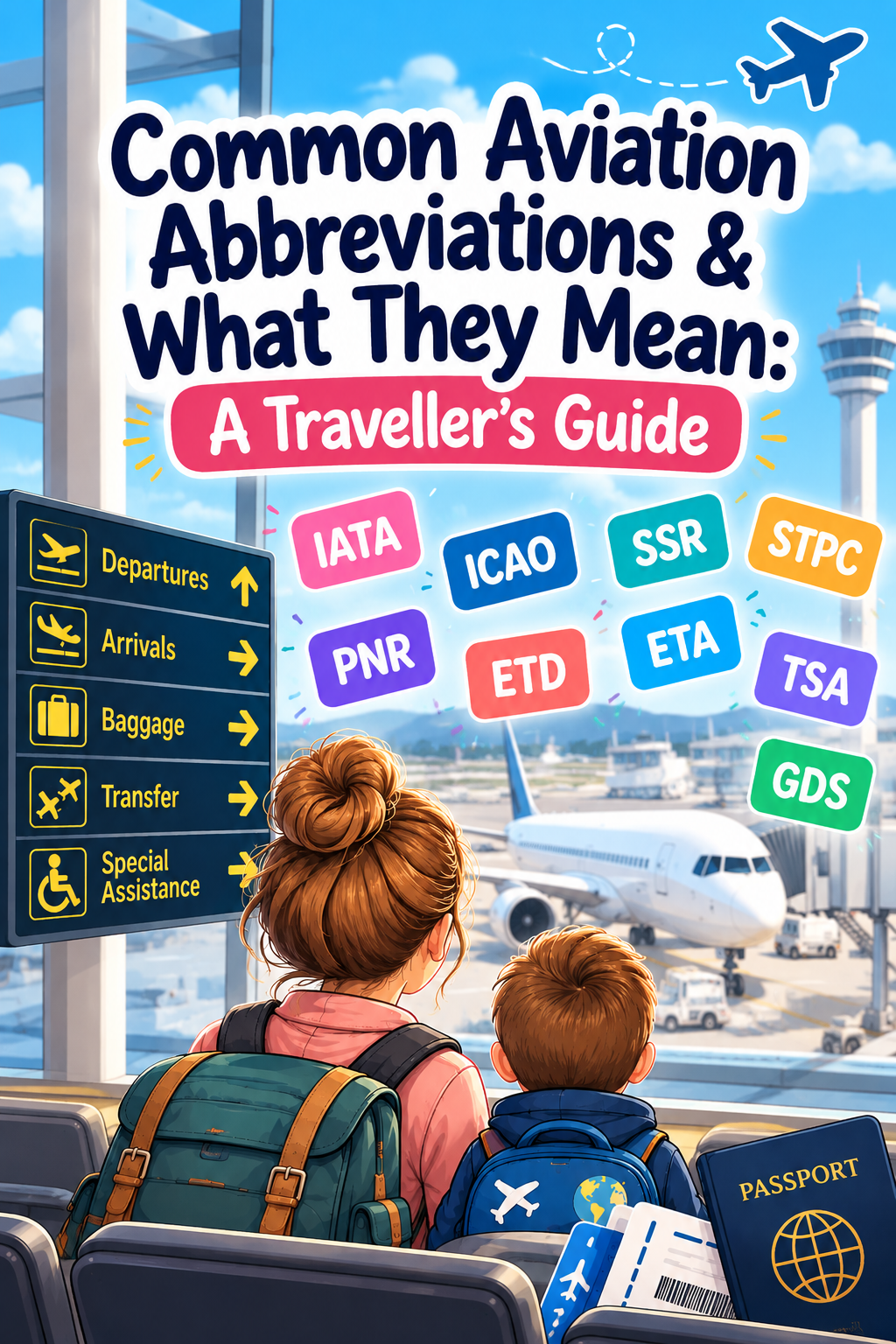
- Airline abbreviations
- Aviation terminology
Each guide explains what the code stands for, when it’s used, who should request it and any important limitations you should know before travelling.
Whether you’re flying for the first time or travel regularly with additional needs, this collection is designed to make airline terminology easier to understand.
Frequently Asked Questions
What are airline codes?
Airline codes are standardised abbreviations used throughout the aviation industry to communicate information about airlines, airports, passenger services, meals, medical requirements and special assistance.
What does SSR mean?
SSR stands for Special Service Request. It is the system airlines use to record additional services such as wheelchair assistance, travelling with pets, medical oxygen or other passenger requirements.
Are airline meal codes the same on every airline?
Many airlines use the standard IATA meal codes, but the meals offered and their availability can vary between airlines and routes.
Can I request an airline meal after booking?
In many cases, yes. Most airlines allow passengers to add or change special meal requests before travel, although deadlines vary depending on the airline.
Do airline codes appear on boarding passes?
Some do. Airport codes and airline designators are commonly shown on boarding passes, while SSR and meal codes usually appear within your booking rather than on the boarding pass itself.
Which airline code guides should I read first?
If you’re unsure where to begin, we recommend starting with our Airline SSR Codes guide and Airline Meal Codes guide, as these cover the codes most travellers are likely to encounter.